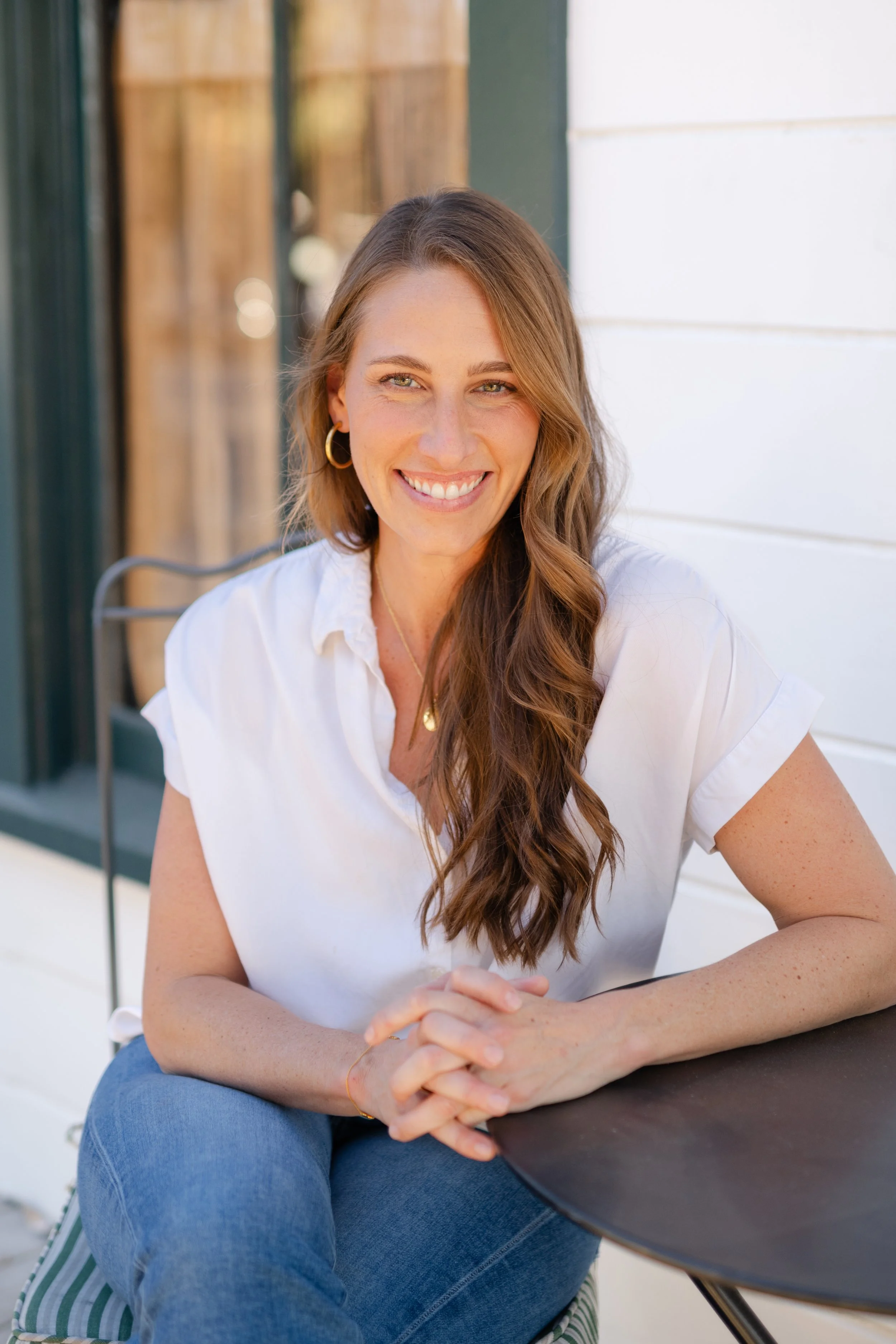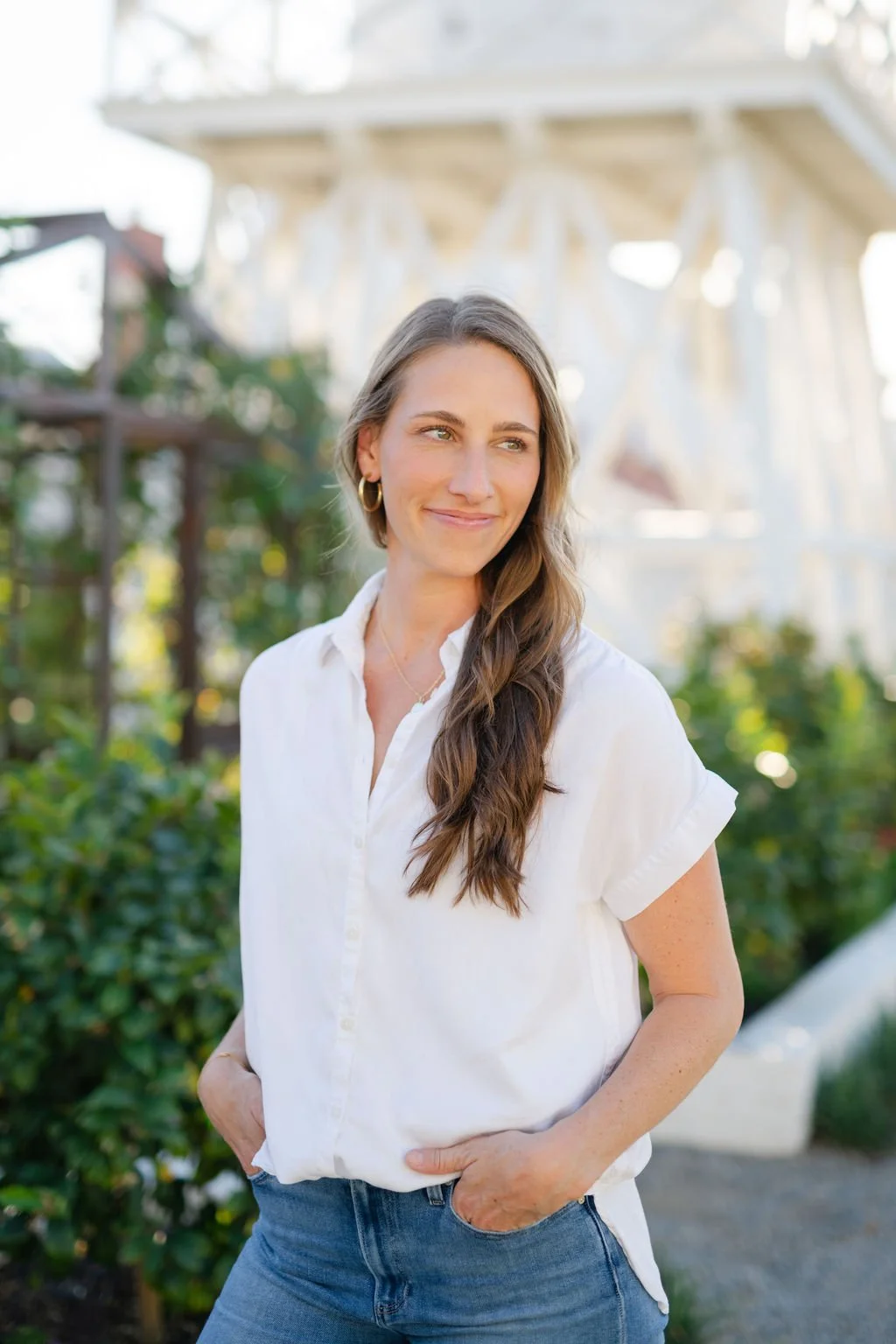

Hi, I’m Annie.
I’m a mom, like you.
I’m also a therapist who specializes in perinatal mental health, birth trauma, the parent-child relationship, and early childhood.
Families are at the heart of my work.
I think about the whole relational system, not just the individual.

MY STORY
I spent ten years in education before I became a therapist.
I was drawn to the relational side of teaching — to giving kids what they actually needed to thrive. But over time I noticed that the challenges my students were facing weren't really classroom challenges. They were attachment, mental health, intergenerational trauma — things happening at home, in the world, in the systems quietly harming the families I cared about. The kind of support I wanted to offer wasn't going to happen inside the educational system. So I went back to school.
While I was in grad school, I got married. Then pregnant. And then, almost by accident, everything clicked.
I was training at UCSF's Infant Parent Program, sitting with perinatal clients during the day while moving through my own experience of pregnancy. I'd planned to specialize in young children, but being pregnant while supporting other women through pregnancy, postpartum, and matrescence shifted something. Everything I'd been drawn to as a teacher — attachment, family systems, the conditions kids need to thrive — all of it starts with pregnancy; with the way mothers are held and supported.
That's where this work begins.
That’s when I knew, with absolute certainty, that this is what I'm meant to do.
I presented my thesis at 8 months pregnant. I graduated at 9 months pregnant. After my leave, I came back to the work at a perinatal-focused private practice, at Calm, and with NICU families through my agency role. I earned my LMFT (license number: #162446), and my PMH-C, and completed my CPP and Perinatal Interpersonal Therapy trainings. Along the way I began the path toward my Infant, Family, and Early Childhood Mental Health (IFECMH) endorsement, which I'm still pursuing.
Perinatal mental health isn’t just my specialty. It's the path that found me, repeatedly, until I couldn't ignore it. It’s the heart of everything I do.

The letters in plain language…
LMFT — Licensed Marriage and Family Therapist. A master's-level therapist trained to think about people in the context of their relationships, as couples and families, not just as individuals.
PMH-C — Perinatal Mental Health Certified. A specialty certification in the mental health of pregnancy and the year after birth. This includes a close look at postpartum anxiety, depression, intrusive thoughts, and birth trauma — the things that don't always get covered in general therapy training.
CPP — Child-Parent Psychotherapy. A treatment model for young children (from birth to age 5) and their caregivers. The therapist works with the parent and child together, focusing on the relationship as the place where healing happens.
IFECMH — Infant, Family, and Early Childhood Mental Health. A specialized endorsement in mental health work with babies, very young children, and the families who care for them–because babies have mental health too, and supporting it early matters.
(
)

Here’s something most people don’t talk about…
The transition to parenthood is one of the most life-altering, and most underestimated, experiences in human life. We prepare for the baby. We don't prepare for what happens inside the person who's having the baby.
From the identity shifts and hormonal shifts, to the relationships that change overnight and the experience of matrescence…
We barely have language for it. We rarely make space for it. And the gap between what's actually happening for new mothers and what our culture acknowledges is where so much unnecessary suffering lives.
That gap is why I do what I do.

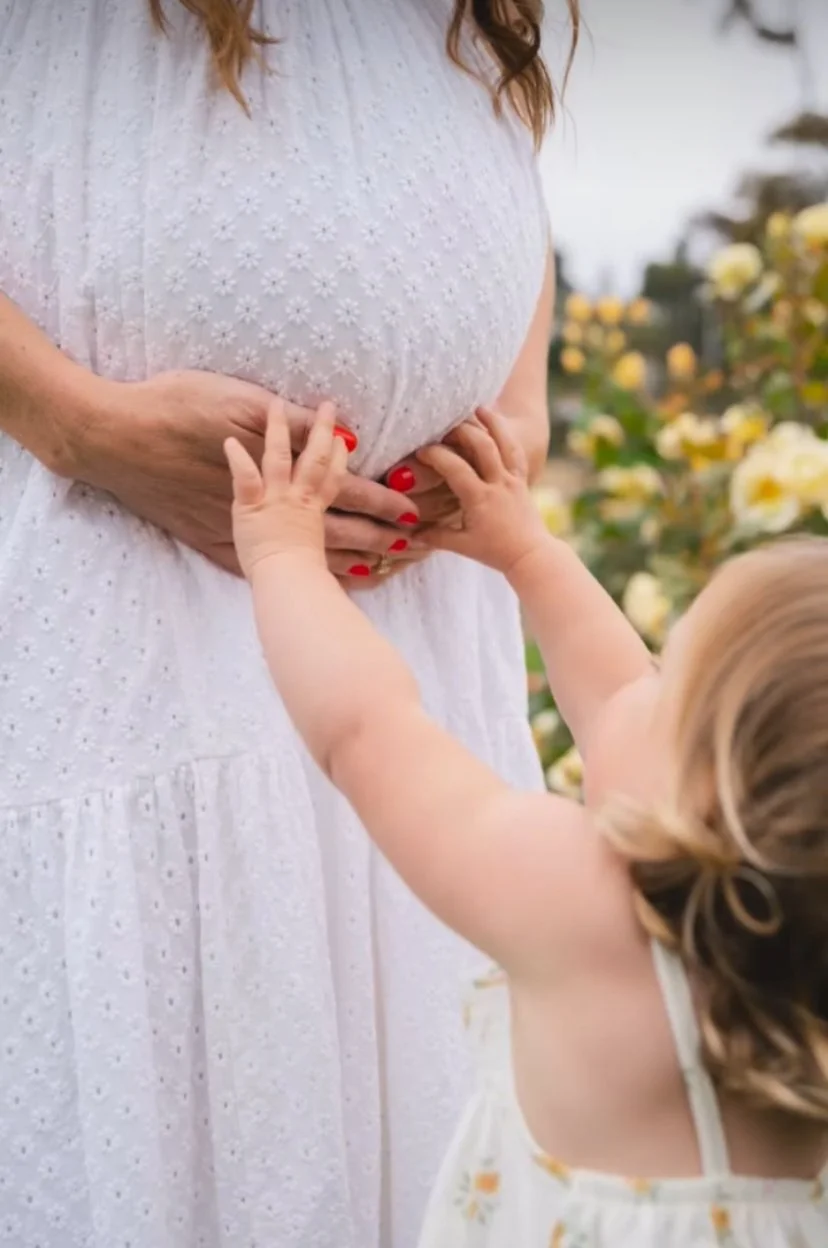
I meet new mothers where they are… because I’ve been there too.
I had a traumatic first birth. And even as a new therapist with a master's in psychology — even working perinatally with clients — I struggled to recognize that I wasn't okay. It took me a long time to admit it was postpartum anxiety and even longer to ask for help.
My own experiences provided a deeper understanding to what the mothers I work with are going through.
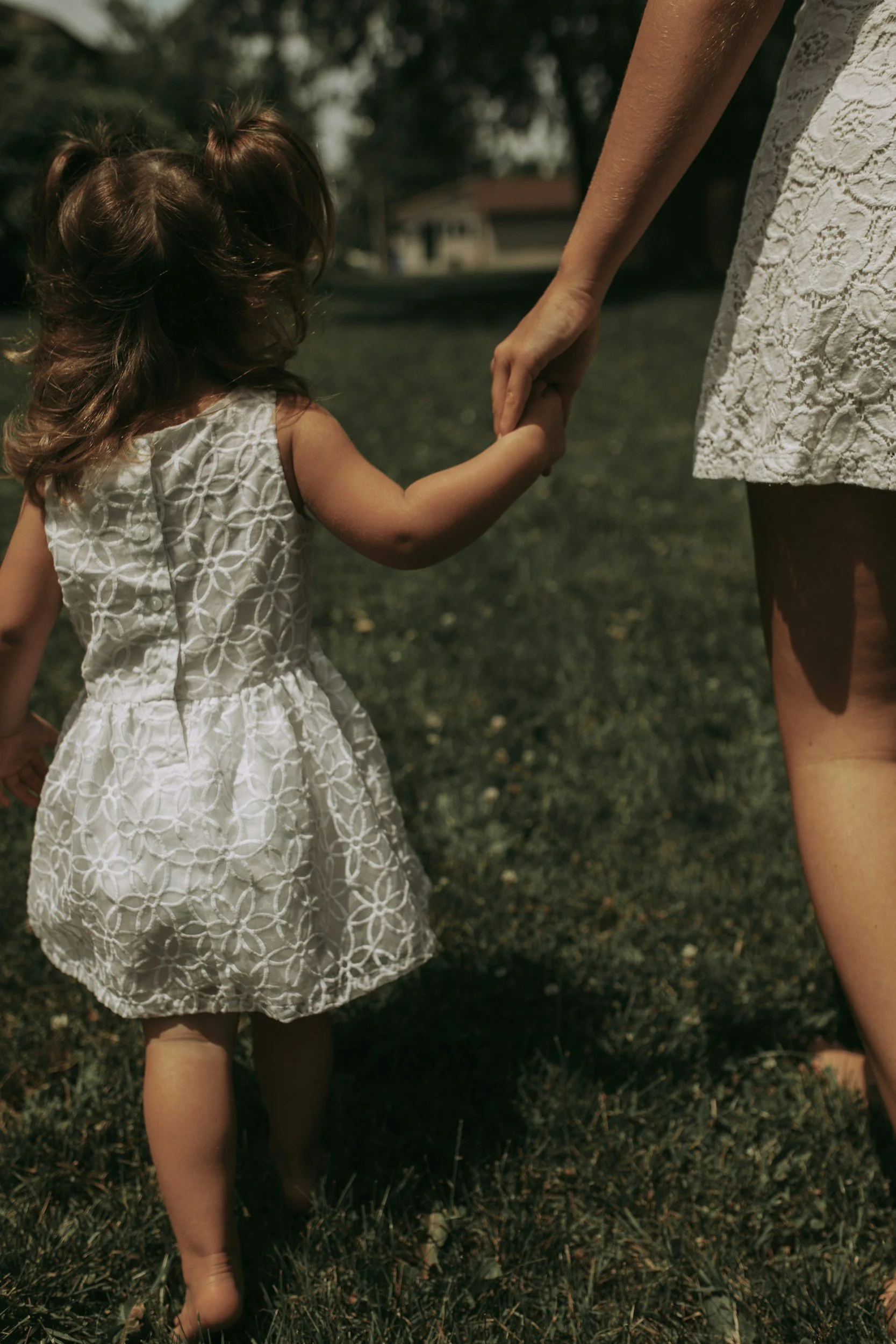
What I Learned
That the bar for asking for help should be much, much lower than most of us have been told. That the welcome to parenthood should be much, much warmer.
And that early motherhood, as hard as it is, is one of the most extraordinary windows for transformation we get as adults. Old patterns come up. Old wounds come up. Things that used to work suddenly don't. And that's not necessarily a problem. It's an opening.

Here’s my wish for you:
That you'll feel more like yourself again — not your old self, but the more honest and grounded version of you that's emerging.
That if your birth was hard, you'll find a way to tell that story without blame or guilt or shame. This happened. It was hard. It is part of your story.
That if you're struggling to feel close to your baby, you'll feel that bond opening — and know that it was always there, waiting for the right conditions.



Ready to talk?
Send me a note using the form below, or if you know you’re ready to connect about therapy services, click the link below to schedule a 15 minute consultation.
I’m here, ready when you are.